
Building a Support Plan Around the Person, Not the Paperwork
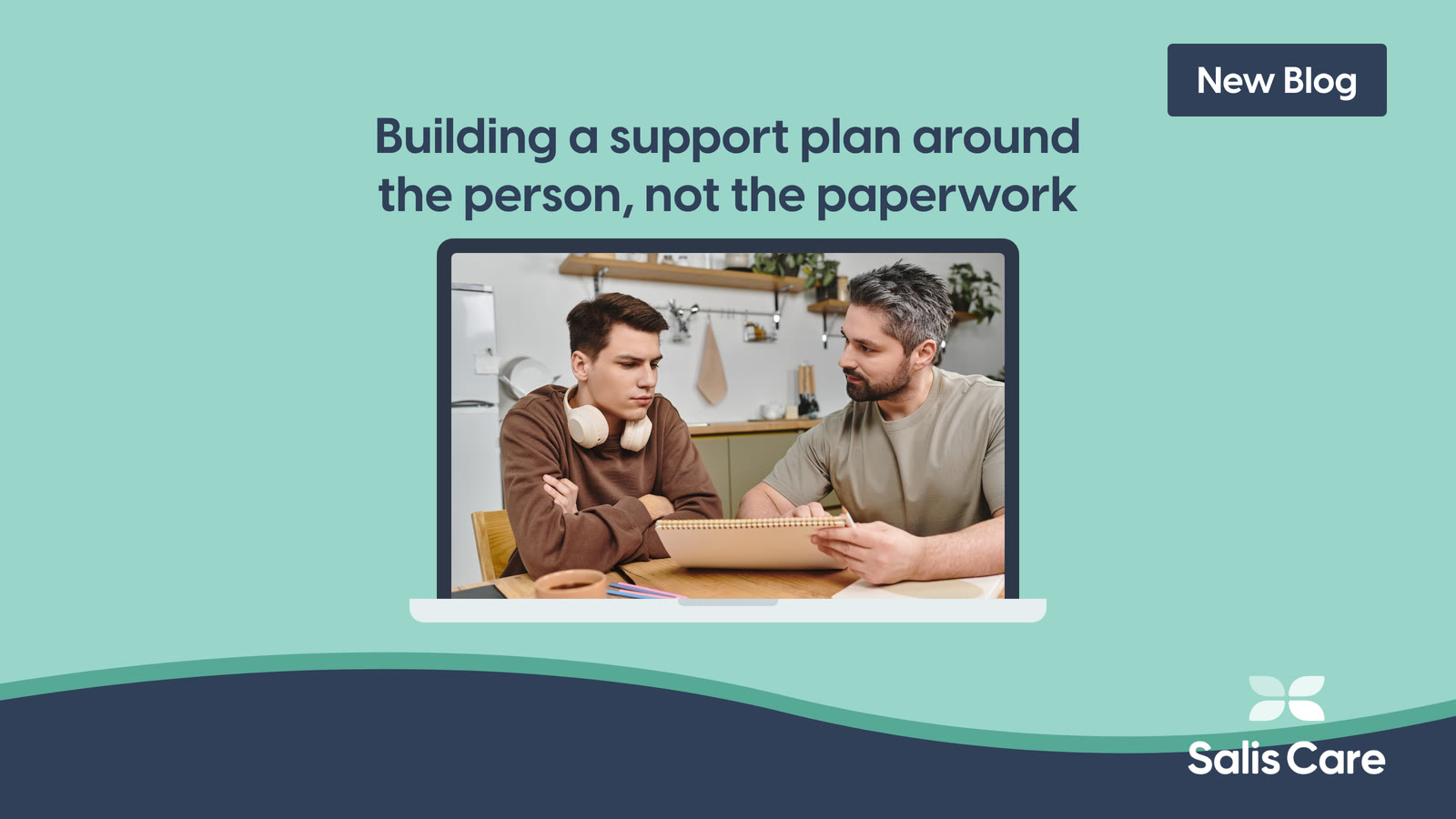
Picture a kitchen table in Reading on a weekday morning. On it there is a mug of tea, a pad of paper and a pen. Across the table sit two people: someone we support and the key worker who knows them best. Nobody has opened a laptop yet. The first question is not “what are your needs” but “what does a good week look like for you?” That is where a support plan starts for us, and it is the opposite of starting with a form.
We have paperwork too, and some of it matters a great deal. But a support plan that exists to satisfy a template is not the same as a plan that helps someone live the life they want. Here is how we try to keep the person at the centre, and the paperwork in its place.
Start with the person’s words, not ours
The best support plans we have written are full of the person’s own language. “I want to get back to the gym.” “I hate being rushed in the morning.” “I would like to see my sister more often.” Those lines tell a new support worker more in ten seconds than a page of clinical description ever could.
So we listen first, and we write down what we hear in the way it was said. If someone wants a goal phrased a particular way, that is how it goes in. If they do not like the word “goal” at all, we call it something else. The plan belongs to them, and it should read like it.
Where someone finds it hard to put things into words, we take our time. We ask the people who know them well, we watch what makes a day go better or worse, and we come back to it more than once. A plan built over a few conversations is almost always truer than one written in a single sitting.
Strengths before difficulties
A lot of paperwork in social care is designed to capture what someone cannot do. That has its place, because we need to understand risk and keep people safe. But if the first page of a support plan is a list of problems, that is the lens every new member of staff will see the person through.
We start with what someone is good at, what they enjoy and what they are proud of. Cooking a particular dish. Remembering every football result. Being the one who checks on a neighbour. They are usually the route to the harder things, because the way someone manages a difficult day is often by doing more of what they already do well.
Make the plan something staff can actually use
A support plan is only useful if the people working a shift can find what they need in it. Thirty pages of narrative does not help anyone at eight o’clock on a Saturday evening.
So we try to keep the practical parts practical. How this person likes to be woken. What helps when anxiety is building. Who to call, and who not to call. What a good night looks like and what an early warning sign looks like. Short, clear and written for the next person through the door, not for an inspector.
The detail that matters most is often small. One person we support likes their coffee made before anything else is said to them in the morning. Another needs to know the plan for the day before breakfast or the whole day wobbles. Neither of those things would appear on a standard form, and both are the difference between a calm morning and a hard one.
Involve the people who matter to them
Families and friends often hold the history that makes a plan make sense. They know why a certain anniversary is difficult, or which approach worked years ago and which never did. Where the person wants them involved, we ask them in, and we keep asking as the plan changes.
This is also what the regulations expect. Regulation 9 of the rules that the Care Quality Commission inspects against says care must be appropriate, meet people’s needs and reflect their preferences, and that the person must be involved in the planning, management and review of their support. We would do it that way anyway, because a plan written with someone lasts and a plan written about them does not.
Review it because life changed, not because the date came round
Most plans carry a review date, and ours do too. But the honest trigger for a review is usually something else: a new job, a bereavement, a change in medication, a friendship that has started or ended, a goal that has been reached. When one of those things happens, the plan should move with it, not wait three months for a scheduled meeting.
Reviews do not have to be formal to be real. Some of the most useful ones happen over a cup of tea when someone says “actually, I do not want to do that any more.” Our job is to notice, write it down and make sure the whole team knows by the next shift.
What good looks like to us
We think a support plan is working when the person could read it and recognise themselves. When a new support worker could pick it up and know how to help on their first shift. When it has changed recently because the person’s life has. And when the paperwork is behind the person, holding things up, rather than in front of them, getting in the way.
Talk to us about support planning
If you are a family member, a social worker or a commissioner and you would like to know how we would build a plan around someone you care about, we would love to hear from you. Contact Salis through the Contact Salis page on our website, or call the team on 0118 405 0199.